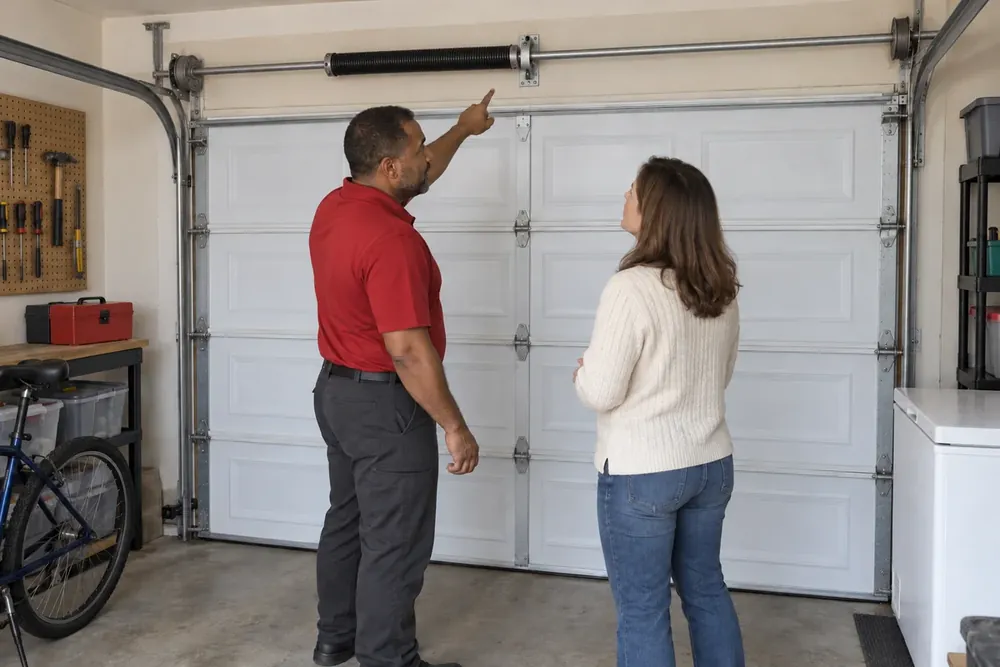
From a Door Symptom to Tested Repairs
Describe the Door's Last Movement
A door that stopped halfway gives your technician a useful symptom to investigate when you call. Say whether it stayed level, dropped at one corner or reversed toward the ceiling. Mention a bang, grinding sound or a motor that runs without moving the door. The same stopping point can have several causes, so describing the movement is more useful than guessing which part failed.
Give your town and street during the conversation. Tell the person answering if a vehicle is trapped or the garage remains open. Call even when you cannot see the spring or read the opener's label. A description in everyday words is enough to begin.
Make the Connection for Repair
The call connects your request with a local garage door professional who handles the diagnosis and work. Explain whether you want a damaged door repaired, an opener replaced or a new door installed. If the opener brand is already known, share it. Your technician checks the actual model and compatible parts during the assessment.
For a stuck door, the next step is finding what prevents normal movement. For a replacement, the next step includes inspecting the opening and existing hardware. You do not need to select a spring, motor or door design to make the call.
Keep Clear of an Unstable Door
A crooked door or one with a broken spring needs to stay unused while you wait for your technician. Stay clear of the opening and do not run the opener. Unplug the opener if you can reach its plug safely without entering the door's path. Leave tensioned parts for professional repair.
When only the remote fails, checking its battery or the wall-control lock button may help identify a control issue. For a door that reverses while closing, checking the photo-eye lenses may reveal dirt. Those observations can be shared during the call. The call does not depend on completing either check.
Find the Cause and Approve the Scope
Your technician examines the door's lifting system, tracks, rollers, panels and opener to distinguish the failed part from related damage. A weak lifting system can make an opener struggle even when the motor works. A bent track can interfere with travel despite an intact spring.
One of our local garage door partners lays out the repair options and total price so you can approve the scope before work begins. Ask which parts need replacement, which remain usable and whether an opener problem comes from the door itself. If replacement makes more sense, your technician explains why and includes that option in the discussion.
Repair the Fault and Check Operation
The agreed repair addresses the cause and includes checks of the door's movement afterward. Your technician verifies balance and travel, then tests the opener's photo-eye and reversing functions when opener operation is part of the job. Any remaining damaged parts belong in that conversation too.
Your technician explains what changed and what to watch for afterward. If the door later starts tilting, stopping or making a different sound, call with the new symptom rather than repeatedly running the opener to reproduce it.