
The short answer
- If the garage door will not open, call now because lost power, a control problem or a broken spring may be responsible.
- A door that lifts only inches may have a broken spring, so stay clear and do not run the opener.
- When only the remote fails, checking its battery and the wall-control lock button is safe while your technician handles further diagnosis.
Stuck Doors, Reversing Doors and Other Warning Signs
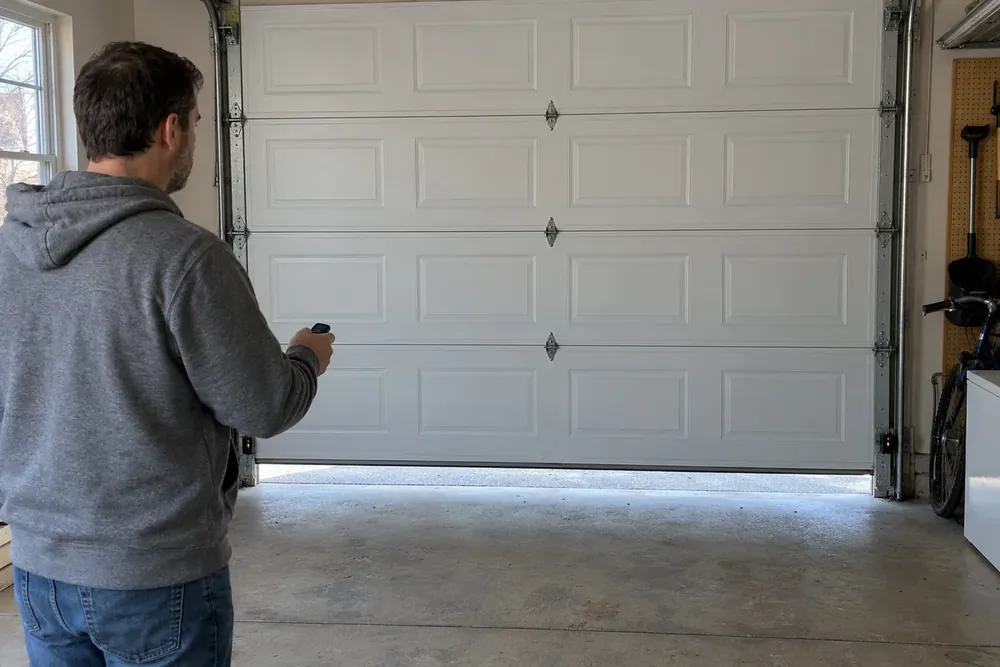
A door that refuses to move may have a control fault or a mechanical failure; the sound and position help your technician distinguish them. If you need to know what to do when a garage door won't open, call and describe the symptom. Safe observations can happen during the call.
Symptoms Point to Different Repairs
A door's movement helps narrow the cause, but an inspection establishes which part has failed. Use the table to describe the problem without operating the door again.
| If the door... | It is usually... | What to do now |
|---|---|---|
| Will not open at all | A power, control or spring problem | Call; stay clear and check the wall-control lock button only if safely accessible. |
| Will not close | A photo-eye problem or mechanical resistance | Stay outside the door's path; check the lenses from a safe position and call. |
| Starts down and reverses | A sensor interruption or resistance during travel | Stay clear; describe where it reverses and let your technician check it. |
| Opens a few inches and stops | A broken spring or another lifting fault | Do not run the opener; call for a spring and lifting-system inspection. |
| Makes grinding or scraping sounds | Worn rollers, hinges or opener drive parts | Stay clear; unplug an accessible opener and call. |
| Shakes during travel | Binding rollers, uneven support or damaged hardware | Keep clear and call for inspection without another operating attempt. |
| Hangs crooked | A cable failure or roller displaced from the track | Do not run the opener; stay clear and call. |
| Stays still while the opener hums | A locked or overloaded door, or an internal opener fault | Unplug the opener if safely accessible and call. |
| Ignores the remote | A weak battery, control lock or receiver fault | Call for diagnosis; a weak battery or engaged lock button is checked too. |
A Silent Door or a Humming Opener
A silent opener may have lost power, while a humming opener is receiving power but failing to move the door. Share whether the light is on during your call; leave electrical diagnosis to your technician. A manual lock bar can also obstruct travel. Your technician checks the bar without forcing the door.
Chamberlain's humming-opener troubleshooting identifies broken springs, an engaged door lock and internal faults among possible causes. Unplug the opener only from a safe position. Do not pull the release cord or try to lift a door with an unknown spring or cable condition.
Closing Failures and Reversals
If the garage door won't close, interrupted photo eyes are a common cause; binding hardware can produce similar symptoms. Check the lenses and observe whether the sensors face each other while staying outside the opening. Leave sensor repositioning, wiring and travel adjustments to your technician.
Chamberlain's closing-failure advice identifies obstructed or misaligned safety sensors as possible causes. Never bypass the sensors or hold a control to override a closing fault. The U.S. Consumer Product Safety Commission's opener rules address entrapment protection, including external devices such as photo eyes.
Short Travel, Noise and Uneven Movement
A door that rises inches after a loud bang often has a broken spring; a crooked door points toward cables or tracks. Stay clear and leave the opener unused. Shaking, scraping and grinding call for inspection of rollers, hinges, tracks and drive parts. Unplug an accessible opener without approaching an unstable door.
Your technician replaces failed parts and tests movement after the cause is corrected. Springs, cables, drums and bottom brackets hold dangerous tension; those repairs belong to your technician.
Remote Failure and the Repair Scope
A remote that stops working while the wall control still works usually points toward the battery, control lock or radio controls. Checking the remote battery and wall-control lock button is safe. Keep clear of the door and call without waiting for either check.
One of our local garage door partners explains the failed part, necessary labor and repair price before work begins. See garage door opener repair for control faults or garage door spring repair for a failed lifting spring.